My blood is in hyper-boiling mode. I'm pretty darn excited about seeing the last space shuttle launch the day after tomorrow. STS-135 blasts off into low earth orbit (LEO) in style. I'll be hopefully watching from Titusville, Fl...from Space View Park...if I make it through the crowds. Im scared of the hordes of people flooding the place. They have already started pouring in....nooooooo!
"Space Junkies show up early for the best show on earth"
Anywayzzz...my tickets booked, car reserved and hotel booked to-be :). Im leaving everything last-minute since there's always a chance of delay due to the mischievous weather. Currently the probability of delay due to isolated thunderstorms, clouds...etc is 60% :S. I hope I don't go there for no reason! The price I have paid is high for this once in a life time event.
Fingers crossed...breath held...and waiting.
Showing posts with label Space. Show all posts
Showing posts with label Space. Show all posts
Tuesday, July 05, 2011

Tuesday, June 28, 2011
Technological Innovations We Got from The Space Program
Monday, June 27, 2011
Last Launch - July 8th
The space shuttle program is ending :(. Shuttle Atlantis will do the honor of blasting off from Cape Canaveral on July 8th. There will be a live tweetup with a number of live video streams covering the event from a number of perspectives. Here's a list of the tweetups so far:
The @NASA sponsored @NASATweetup held at the press site:
@NASATweetup/sts-135-launch
Space View Park Tweetup:
@SVPTweetup
NASA Causeway:
@CausewayTweetup/sts135-causewaytweetup
reference: [ref]

Im seriously thinking of going to Florida to witness the last launch. I hope I can make it. The only thing im scared of is if they postpone the launch (which happens all the time) then I will have flown down there for no reason :S. We'll just have to wait and see.
The @NASA sponsored @NASATweetup held at the press site:
@NASATweetup/sts-135-launch
Space View Park Tweetup:
@SVPTweetup
NASA Causeway:
@CausewayTweetup/sts135-causewaytweetup
reference: [ref]

Im seriously thinking of going to Florida to witness the last launch. I hope I can make it. The only thing im scared of is if they postpone the launch (which happens all the time) then I will have flown down there for no reason :S. We'll just have to wait and see.
Sunday, January 23, 2011
Name On Mars
Again, I've been caught up in the spaghetti threads of life and haven't blogged in ages. Now I'm back with a short post about my name being sent to Mars this year!
I was surfin' through the Nasa website when I came across this link that read: "send your name to mars". I instantly clicked on it and voila! My name will be written on a microchip which will be sent to the red planet this year.
I know some might say, "what on earth is this guy thinking?" :) - but why not? I'm delighted to know my name will be up there saved in time on our neighboring planet. So here's the certificate I got to prove that my name will be written on a microchip on the Mars Science Laboratory rover launching into space this year (2011).

If you want to do the same - click here
I was surfin' through the Nasa website when I came across this link that read: "send your name to mars". I instantly clicked on it and voila! My name will be written on a microchip which will be sent to the red planet this year.
I know some might say, "what on earth is this guy thinking?" :) - but why not? I'm delighted to know my name will be up there saved in time on our neighboring planet. So here's the certificate I got to prove that my name will be written on a microchip on the Mars Science Laboratory rover launching into space this year (2011).

If you want to do the same - click here
Monday, July 26, 2010
One Small Step Closer to the Ball of Cheese
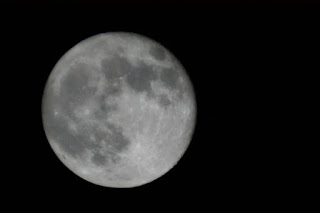
I checked the weather forecast and to my delight found no "scattered thunderstorms". It was going to be clear skies and a bright full moon. I rounded up my telescope and camera gear and headed out to see the full moon clearer than I've ever seen it. It was magnificent! The big ball of cheese we take for granted that sits up there illuminating our night sky was filling up my lens.
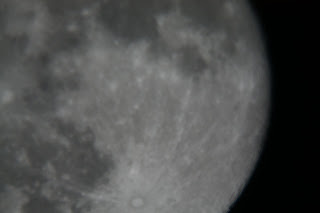
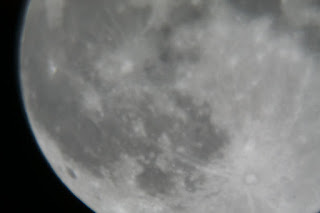
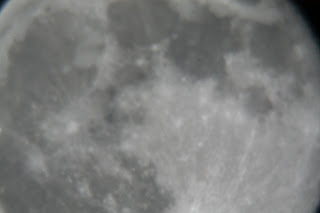
I attached the regular 20mm lens and could see the whole moon within the field of view. Then I added the 3x Barlow lens and could see the craters up close and personal. I also tried out the 6.3mm and again got a clear view of the detailed war-like terrain on the face of the moon.
I saw the Tycho crater clearly with its streaks flying out like the spokes of a bicycle wheel. I saw most of the seas (the darker depressions on the surface) and many more craters recording the history of the battered sphere.
After viewing it through the lenses I decided to hook it up to my camera and snap some pix.
Here's what it looked like through the 20mm lens.
and here's how it looked through the Barlow lens:

It's magnificent how man has set foot on this natural satellite (God Bless Nasa - if you don't believe in the conspiracy :)). If you think its a conspiracy, watch the Myth-busters episode on proving whether the moon-landing was a hoax.
The moon's diameter is quarter the size of earths. Its mass is 1/81 of the earth's mass. The average distance between the earth and moon is 384403 km. Despite the distance my telescope has succeeded in showing me it like I've never seen before by my naked eye. Truly amazing.
[My telescope is a 127mm Celestron]
I attached the regular 20mm lens and could see the whole moon within the field of view. Then I added the 3x Barlow lens and could see the craters up close and personal. I also tried out the 6.3mm and again got a clear view of the detailed war-like terrain on the face of the moon.
I saw the Tycho crater clearly with its streaks flying out like the spokes of a bicycle wheel. I saw most of the seas (the darker depressions on the surface) and many more craters recording the history of the battered sphere.
After viewing it through the lenses I decided to hook it up to my camera and snap some pix.
Here's what it looked like through the 20mm lens.

and here's how it looked through the Barlow lens:


It's magnificent how man has set foot on this natural satellite (God Bless Nasa - if you don't believe in the conspiracy :)). If you think its a conspiracy, watch the Myth-busters episode on proving whether the moon-landing was a hoax.
The moon's diameter is quarter the size of earths. Its mass is 1/81 of the earth's mass. The average distance between the earth and moon is 384403 km. Despite the distance my telescope has succeeded in showing me it like I've never seen before by my naked eye. Truly amazing.
[My telescope is a 127mm Celestron]
Friday, April 30, 2010
ISS Flies Over
After missing the longer duration fly over of the ISS (International Space Station) yesterday which was publicized via email, I went out today to see it again. It appeared for 2 minutes and rose from the NW and set in the NNE. It looked like a fast moving medium-bright star. I managed to snap one lousy shot of the thing. You can see it in the image below (you have to click on it to see the tiny spec in the center of the image, just to the left of the trees). I posted a cropped zoom in of the white spec.

This is the actual thing (image source: wikipedia):
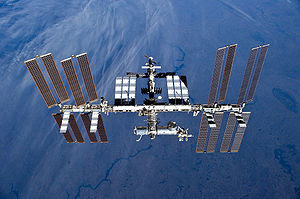
The ISS is a joint project by the US, Europe, Russia and Japan. Other parts have been built by other countries but those space agencies are mostly responsible for the construction which started in 1998 and is scheduled for completion in 2011. It is the largest satellite orbiting Earth and currently there are 6 astronauts living aboard it.


This is the actual thing (image source: wikipedia):

The ISS is a joint project by the US, Europe, Russia and Japan. Other parts have been built by other countries but those space agencies are mostly responsible for the construction which started in 1998 and is scheduled for completion in 2011. It is the largest satellite orbiting Earth and currently there are 6 astronauts living aboard it.
Friday, July 31, 2009
Dwarf Planets (Poor Pluto)
In 2006 formerly classified planet, Pluto was striped of its planet status and reclassified as a dwarf planet.

The key difference between the otherwise identical planet and dwarf planet is the fact that dwarfs share their orbit space with other objects with similar sizes. In the end stages of planet formation, a planet will have cleared the neighbourhood of its own orbital zone, meaning it has become gravitationally dominant. This means that there are no other bodies of comparable size other than its own satellites or those otherwise under its gravitational influence. The current definition of a planet adopted by the International Astronomical Union only includes those bodies which have "cleared the neighbourhood of its orbit." A large body which meets the other criteria for a planet but has not cleared its neighbourhood is classified as a dwarf planet. In Pluto's case, it shares its orbital neighbourhood with a distinct population of objects called the Kuiper belt (Pluto is the largest of these objects).
NB: Astronomers and other experts are debating the definition of a dwarf planet and whether or not Pluto should be classified as one.

The key difference between the otherwise identical planet and dwarf planet is the fact that dwarfs share their orbit space with other objects with similar sizes. In the end stages of planet formation, a planet will have cleared the neighbourhood of its own orbital zone, meaning it has become gravitationally dominant. This means that there are no other bodies of comparable size other than its own satellites or those otherwise under its gravitational influence. The current definition of a planet adopted by the International Astronomical Union only includes those bodies which have "cleared the neighbourhood of its orbit." A large body which meets the other criteria for a planet but has not cleared its neighbourhood is classified as a dwarf planet. In Pluto's case, it shares its orbital neighbourhood with a distinct population of objects called the Kuiper belt (Pluto is the largest of these objects).
NB: Astronomers and other experts are debating the definition of a dwarf planet and whether or not Pluto should be classified as one.
Saturday, January 24, 2009
Indians in Space (Chandrayaan)
October of last year, India sent up its first space mission. It sent up Chandrayaan-1 which consisted of a lunar orbiter and an impacter. The impacter separated from the orbiter and hit the surface of the moon releasing debris which was analyzed for water/ice. The orbiter will map the surface of the moon. Already images of the deep moon craters have been beamed back.

India has become the fourth country after the US, Russia and Japan to put its flag on the moon. This is quite an achievement. It shows that India is a force to be reckoned with. In the 1960s American products were boosted by the US missions into space. The missions were seen as a sign of technological advancement in all aspects, not just space flight. Japan visited the moon in 1990, China sent probes up into lunar orbit and now India successfully completes its first event in the exploration of our moon. This definitely gives a boost to Indian technology. They have already developed the worlds cheapest car. Despite the enormous poverty they are on the right track in the technological sector.

India has become the fourth country after the US, Russia and Japan to put its flag on the moon. This is quite an achievement. It shows that India is a force to be reckoned with. In the 1960s American products were boosted by the US missions into space. The missions were seen as a sign of technological advancement in all aspects, not just space flight. Japan visited the moon in 1990, China sent probes up into lunar orbit and now India successfully completes its first event in the exploration of our moon. This definitely gives a boost to Indian technology. They have already developed the worlds cheapest car. Despite the enormous poverty they are on the right track in the technological sector.
Stellar Navigation (Finding Polaris)
I don't think many people know how to navigate using the stars. I know that there is a one in a million chance that you'd be stuck in the middle of nowhere and only have the stars to guide you.
I think its just something interesting to know which may, you never know, save your life. It's very simple. To find North you need to look for Polaris (The North Star). People usually think Polaris is very bright. It isn't actually. It is just surrounded by rather dim stars so it stands out a bit.
The first thing you have to do is look for a particular constellation called "The Big Dipper". It is also known as "Ursa Major". It looks like this:

Once you have found this constellation, you should line up the two stars at the end of the bowl part of the constellation. If you line them up and extend that line you should meet a star directly along its path that is brighter than its adjacent stars. This is Polaris. This star always points in the Northern direction.

I think its just something interesting to know which may, you never know, save your life. It's very simple. To find North you need to look for Polaris (The North Star). People usually think Polaris is very bright. It isn't actually. It is just surrounded by rather dim stars so it stands out a bit.
The first thing you have to do is look for a particular constellation called "The Big Dipper". It is also known as "Ursa Major". It looks like this:

Once you have found this constellation, you should line up the two stars at the end of the bowl part of the constellation. If you line them up and extend that line you should meet a star directly along its path that is brighter than its adjacent stars. This is Polaris. This star always points in the Northern direction.

Saturday, October 11, 2008
One Heck of a Documentary!
Just finished watching part II of "When We Left Earth: The NASA Missions". It was utterly breathtaking to watch every minute of it. I still haven't watched part III but definitely look forward to it.

Anyone with interest in space, technology and scientific success stories would find this documentary childishly spell-binding.
My advise -> Get it & watch it!
It shows that inspiration, aspiration, perspiration and determination can make wonders.

Anyone with interest in space, technology and scientific success stories would find this documentary childishly spell-binding.
My advise -> Get it & watch it!
It shows that inspiration, aspiration, perspiration and determination can make wonders.
Monday, March 17, 2008
Space Tourismo!!!
How amazing would it be to go up into space, experience zero-g and to look back at our home planet and see how small we really are in the context of the universe.
The Russian space program offers trips to the International Space Station. There have been five space tourists who have undertaken this trip before. The next person to go up to the ISS in October of this year is Richard Garriot - a Game desginer. The last one to go up was Charles Simonyi - a software company executive. Richard Garriot is paying 30 million dollars for this. Quite an astonishing amount of money to be paid by one man for one trip.
Is this a waste of money? I personally think there are much more productive ways to spend that kind of money. For starters he could help millions of unfortunate people on Earth instead of riding off on his dream voyage. He could help starving people. He could donate it to disease research. There are many benefits 30 MILLION DOLLARS can bring!!!!
In the end it isn't my decision, I'm just wondering how the last two to go up are people in the software business!!! I want to be next!!!...hehe.
The Russian space program offers trips to the International Space Station. There have been five space tourists who have undertaken this trip before. The next person to go up to the ISS in October of this year is Richard Garriot - a Game desginer. The last one to go up was Charles Simonyi - a software company executive. Richard Garriot is paying 30 million dollars for this. Quite an astonishing amount of money to be paid by one man for one trip.
Is this a waste of money? I personally think there are much more productive ways to spend that kind of money. For starters he could help millions of unfortunate people on Earth instead of riding off on his dream voyage. He could help starving people. He could donate it to disease research. There are many benefits 30 MILLION DOLLARS can bring!!!!
In the end it isn't my decision, I'm just wondering how the last two to go up are people in the software business!!! I want to be next!!!...hehe.
Monday, March 10, 2008
Dexter in Space!
We are minutes away from witnessing the launch of the Endeavour space shuttle from the Kennedy Space Center, Florida, USA. It's quite amazing that some people are unaware of something orbiting the Earth called the international space station...hmmm...interesting...
The shuttle will be taking up an interesting two-armed robot called Dextre. Its a Canadian made robotic arm which will help substitute astronauts going out for space-walks. The shuttle is also taking up a Japanese made science laboratory or a piece of it at least.
This is Dextre below...

Quite fascinating I must say.
The shuttle will be taking up an interesting two-armed robot called Dextre. Its a Canadian made robotic arm which will help substitute astronauts going out for space-walks. The shuttle is also taking up a Japanese made science laboratory or a piece of it at least.
This is Dextre below...

Quite fascinating I must say.
Subscribe to:
Comments (Atom)